
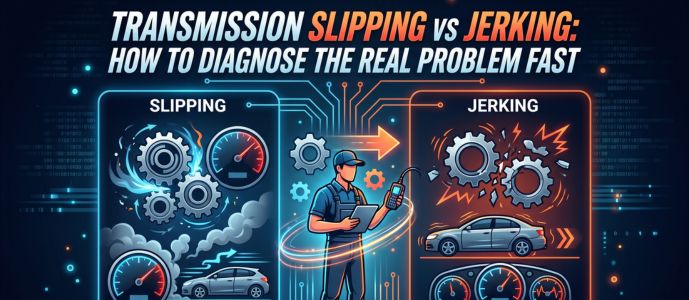
Transmission Slipping vs Jerking: How to Diagnose the Real Problem Fast
If your car isn’t shifting smoothly, you may notice two common issues: slipping or jerking. While both feel like transmission problems, they are not the same-and misdiagnosing them can lead to unnecessary repairs or higher costs.
In 2026, many drivers confuse these symptoms and either ignore the issue or replace the wrong component. Understanding the difference helps you fix the problem quickly and decide whether repair or replacement-like a used transmission for sale or even related engine components such as used automobile engines-is the smarter choice.
Let’s break it down clearly.
What Is Transmission Slipping?
Slipping happens when the transmission fails to stay in the correct gear.
Common Signs:
- Engine revs increase without speed increase
- Delayed acceleration
- Trouble climbing hills
- Gear changes feel soft or inconsistent
- Burning smell
What It Means:
The transmission is losing power transfer to the wheels.
What Is Transmission Jerking?
Jerking happens when the transmission shifts too harshly or suddenly.
Common Signs:
- Hard gear changes
- Sudden lurch forwards
- Clunk when shifting
- Rough transitions between gears
- Shaking at low speed
What It Means:
The transmission is engaging gears too aggressively or incorrectly.
Key Differences: Slipping vs Jerking
| Issue | Slipping | Jerking |
|---|---|---|
| Feel | Weak, delayed | Harsh, sudden |
| Acceleration | Poor | Uneven |
| Gear Engagement | Loose or lost | Too aggressive |
| Main Cause | Wear or pressure loss | Sensors, mounts, or control issues |
Understanding this difference helps narrow down the root cause quickly.
Causes of Transmission Slipping
- Low or Burnt Transmission Fluid: Fluid is essential for pressure and lubrication.
- Worn Clutch Packs or Bands: Common in high-mileage vehicles.
- Internal Seal Damage: Leads to pressure loss inside the transmission.
- Torque Converter Issues: A failing converter can cause slipping during acceleration.
Causes of Transmission Jerking
- Dirty or Old Fluid: Can cause rough shifts instead of smooth engagement.
- Faulty Sensors: Speed sensors or throttle sensors can mislead the system.
- Bad Transmission Mounts: Loose mounts create a jerking sensation.
- Shift Solenoid Problems: Electronic control issues lead to harsh shifting.
Could It Be the Engine Instead?
Not every shifting issue comes from the transmission. Sometimes, engine problems create similar symptoms.
Engine-Related Causes:
- Misfiring spark plugs
- Fuel delivery issues
- Air intake problems
- Throttle body issues
In some cases, drivers consider used automobile engines if performance problems are severe and widespread.
How to Diagnose the Real Problem Fast
Step 1: Check Fluid Condition
- Clean red fluid → Good
- Dark/burnt → Needs replacement
- Low level → Possible leak
Step 2: Scan for Error Codes
Modern vehicles store diagnostic codes.
Helps Identify:
- Sensor failures
- Solenoid issues
- Transmission faults
Step 3: Observe When It Happens
Slipping:
- Happens under acceleration
- Worse on hills
Jerking:
- Happens during gear shifts
- More noticeable at low speeds
Step 4: Test Drive Behavior
Pay attention to:
- RPM vs speed
- Smoothness of shifting
- Delay in gear engagement
Repair vs Replacement in 2026
When Repair Is Enough
- Fluid is dirty or low
- Sensors are faulty
- Mounts are worn
- Minor solenoid issues
These are relatively affordable fixes.
When Replacement Makes Sense
- Severe slipping continues
- Internal damage confirmed
- Metal debris found in fluid
- Repair cost too high
At this stage, many drivers search for a used transmission for sale as a cost-effective alternative.
Choosing a Used Transmission
If replacement is needed, focus on quality.
Look For:
- Compatibility with your vehicle
- Reasonable mileage
- Warranty coverage
- Tested condition
- Trusted supplier
When Engine Replacement May Also Be Needed
If symptoms include:
- Poor acceleration overall
- Engine knocking
- Severe misfires
- High oil consumption
Then transmission may not be the only issue, and used automobile engines might be part of the solution.
Mistakes to Avoid
- Ignoring early warning signs
- Driving with slipping transmission
- Replacing transmission without diagnosis
- Buying cheapest parts without warranty
- Skipping fluid maintenance
Pro Tips for Long-Term Reliability
- Service transmission fluid regularly
- Fix leaks immediately
- Avoid aggressive driving
- Warm up vehicle before heavy use
- Address small issues early
Final Thoughts
Transmission slipping and jerking may feel similar, but they point to different problems. Slipping usually indicates internal wear or pressure loss, while jerking often comes from control issues, mounts, or sensors.
Diagnosing the issue early can save you thousands in repair costs. If the damage is severe, a used transmission for sale can be a practical replacement option. And if performance issues extend beyond the gearbox, exploring used automobile engines may also be necessary.
The key is simple: identify the problem correctly, act early, and choose the right solution for your vehicle.