
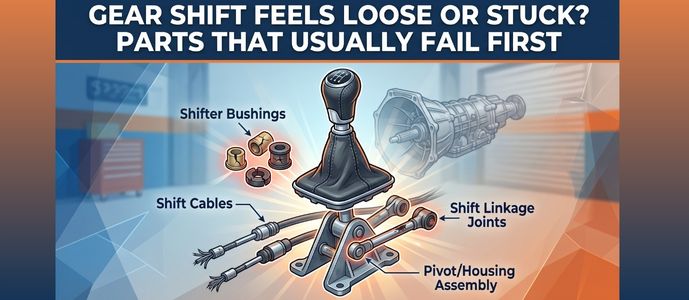
Gear Shift Feels Loose or Stuck? Parts That Usually Fail First
If your gear shift suddenly feels loose, wobbly, stiff, or gets stuck in one position, it’s a warning sign that something in the shifting system is starting to fail. Many drivers assume the transmission is ruined, but in many cases the issue begins with smaller, less expensive components.
In 2026, both automatic and manual vehicles commonly develop shifter problems from age, worn bushings, stretched cables, damaged linkage, or electronic selector faults. The good news is that many of these repairs are manageable, and some owners save money by sourcing used auto parts or comparing a used transmission for sale if major damage is found.
In this guide, we’ll explain why a gear shift feels loose or stuck and which parts usually fail first.
Common Symptoms of a Bad Gear Shift System
You may notice:
- Gear shift feels loose or floppy
- Hard to move into Drive, Reverse, or Park
- Shifter stuck in Park
- Extra side-to-side movement
- Gear selected doesn’t match dashboard display
- Clicking, binding, or grinding feel
- Vehicle won’t move in selected gear
These symptoms often point to linkage or selector issues first.
1. Shift Cable (Most Common Failure)
Many automatic vehicles use a shift cable between the cabin shifter and transmission.
What Goes Wrong:
- Cable stretches
- Plastic ends break
- Internal cable binds
- Cable disconnects
Symptoms:
- Loose shifter feel
- Wrong gear engages
- Shifter moves but transmission doesn’t respond
Replacing a cable is usually far cheaper than replacing the transmission.
2. Shifter Bushings
Bushings keep the shifter tight and accurate.
When Worn:
- Sloppy movement
- Rattling feel
- Inconsistent gear selection
- Extra play in lever
These are small parts that create big symptoms.
3. Shift Linkage Rods / External Hardware
Some vehicles use rods and external linkage.
Failures Include:
- Rusted joints
- Bent rods
- Loose fasteners
- Misalignment after repair work
This can make the gear shift feel stuck or vague.
4. Brake Shift Interlock (Automatic Cars)
Most automatics require brake pedal input before shifting out of Park.
If It Fails:
- Stuck in Park
- No click sound when brake pressed
- Brake lights may fail too
Sometimes only the brake switch needs replacement.
5. Shifter Assembly Wear
The cabin shifter itself can wear internally.
Signs:
- Loose handle
- Broken release button
- Wobble in all positions
- Hard movement
Older vehicles often develop this issue.
6. Transmission Range Sensor
This sensor tells the car what gear you selected.
Symptoms:
- Won’t start in Park
- Wrong gear displayed
- Delayed movement after shifting
The shifter may feel normal, but operation becomes erratic.
7. Internal Transmission Problems
Sometimes the shift lever is fine, but the transmission is not.
Signs:
- Shifter moves normally but car won’t move
- Grinding noises
- Slipping while driving
- Delayed engagement
- Burning smell
If internal damage is severe, some owners compare a used transmission for sale rather than paying rebuild costs.
Manual Transmission Causes
If you drive manual, loose or stuck shifting may involve:
- Worn shift linkage bushings
- Bad clutch hydraulics
- Selector fork wear
- Synchronizer damage
- Misadjusted linkage
Manual symptoms often feel different from automatics.
Quick Checks You Can Do
Automatic:
- Do brake lights work?
- Does shifter button release normally?
- Is problem only in Park?
Manual:
- Does clutch pedal feel soft?
- Easier to shift with engine off?
- Grinding into gears?
These clues help identify where to start.
Smart Repair Options in 2026
Many shifter problems do not require a full transmission.
Lower-Cost Fixes:
- Replace bushings
- Replace shift cable
- Repair linkage
- Replace brake switch
- Install shifter assembly
Many drivers reduce repair cost using tested used auto parts for non-critical components like shifter assemblies or linkage pieces.
When a Used Transmission Makes Sense
If internal gearbox damage is confirmed, replacement may be more practical.
Owners often search for a used transmission for sale because:
- Lower cost than new unit
- OEM fitment
- Good option for older vehicles
- Faster turnaround than rebuild in some cases
Choose verified mileage and warranty when possible.
Mistakes to Avoid
- Forcing a stuck shifter aggressively
- Ignoring looseness for months
- Driving when gear position is uncertain
- Assuming every issue needs transmission replacement
- Buying unknown used auto parts without compatibility checks
Pro Tips for 2026 Drivers
- If Stuck in Park: Check brake lights first.
- If Loose but Still Drives: Inspect cable and bushings early.
- If Car Won’t Move: Have transmission professionally diagnosed quickly.
- If Repair Costs Rise: Compare rebuild pricing vs a used transmission for sale.
Final Thoughts
A loose or stuck gear shift is often caused by smaller components like cables, bushings, linkage, sensors, or shifter assemblies-not always total transmission failure. Catching these issues early can save serious money.
If major damage is found, many owners compare used auto parts or a used transmission for sale to keep an otherwise reliable vehicle on the road affordably.
Don’t ignore shifter changes—small symptoms today can become major breakdowns tomorrow.